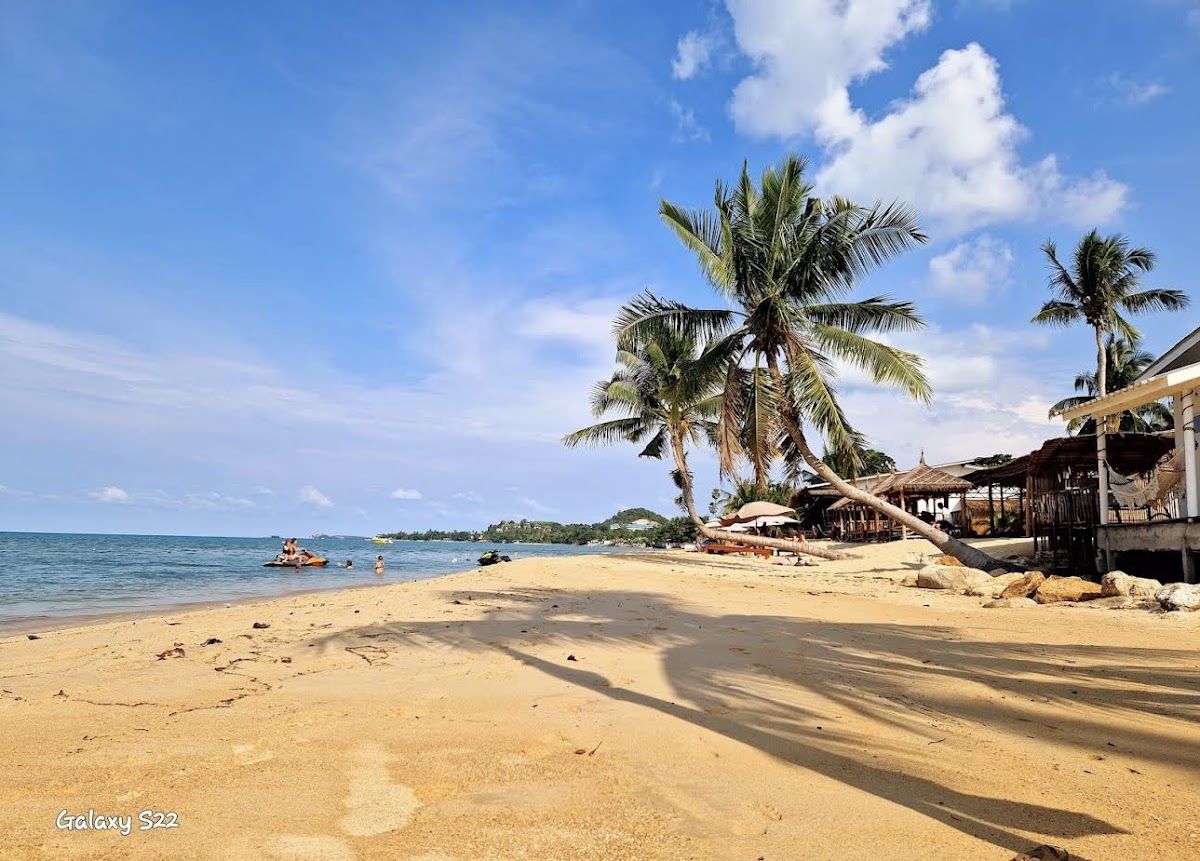
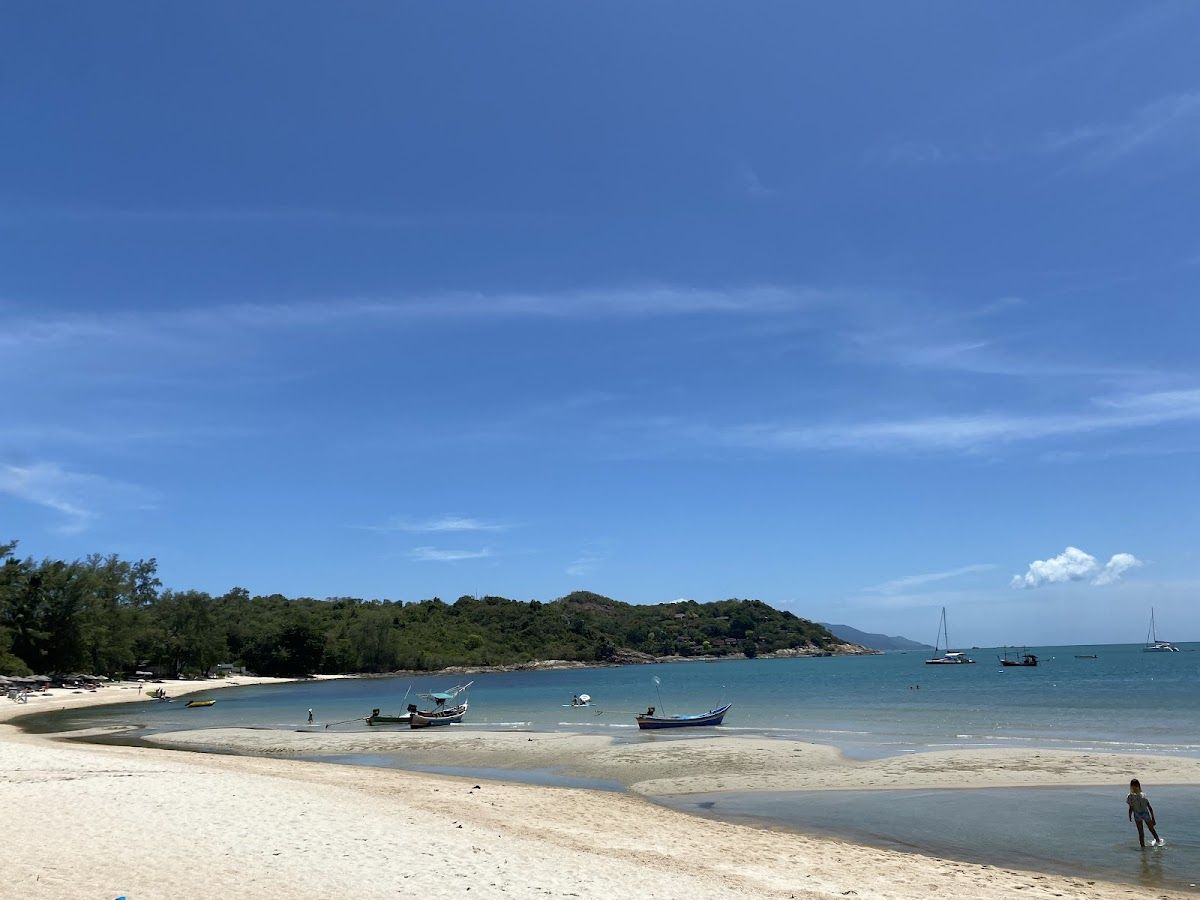
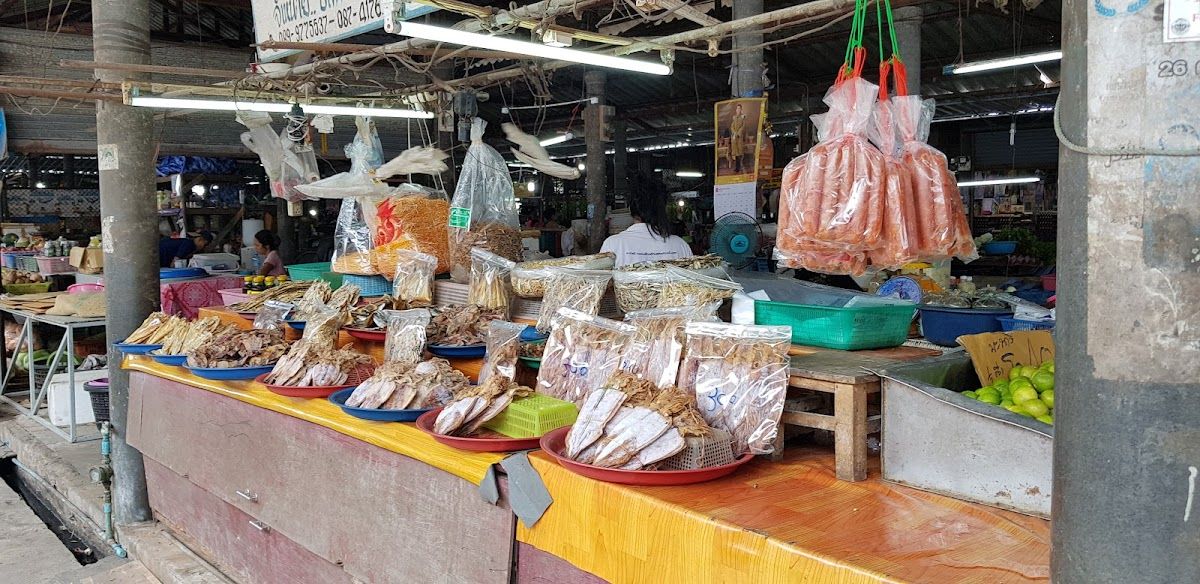

Koh Samui is a coconut island first and a tourist island second — a distinction the food reflects. The inland villages have morning markets that predate the resort era. The southern Thai cooking tradition runs to the genuinely spicy and sour end of the spectrum. And the Friday night market in Bophut draws both locals and visitors in roughly equal numbers, which is usually a reliable sign that the food is actually good.
The tourist strips in Chaweng serve everything — pizza, burgers, pad thai — at prices that scale with proximity to the beach road. The guides below skip those and focus on where Samui’s food is interesting.
Quick facts
Prices below are typical 2026 stall and restaurant ranges, not a menu. Checked against local 2026 guides on 12 October 2026 for the Friday market; the baht figures are the ones this page has used through 2026.
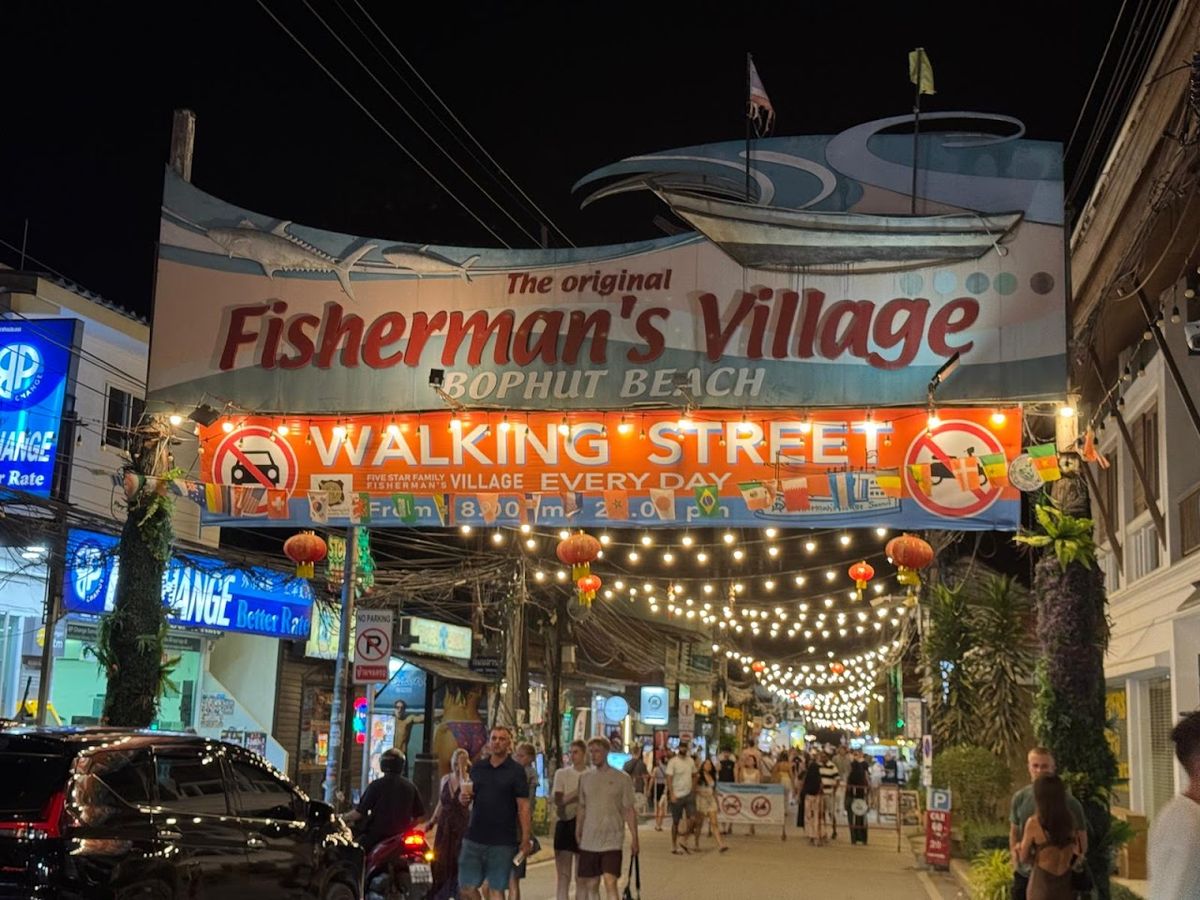
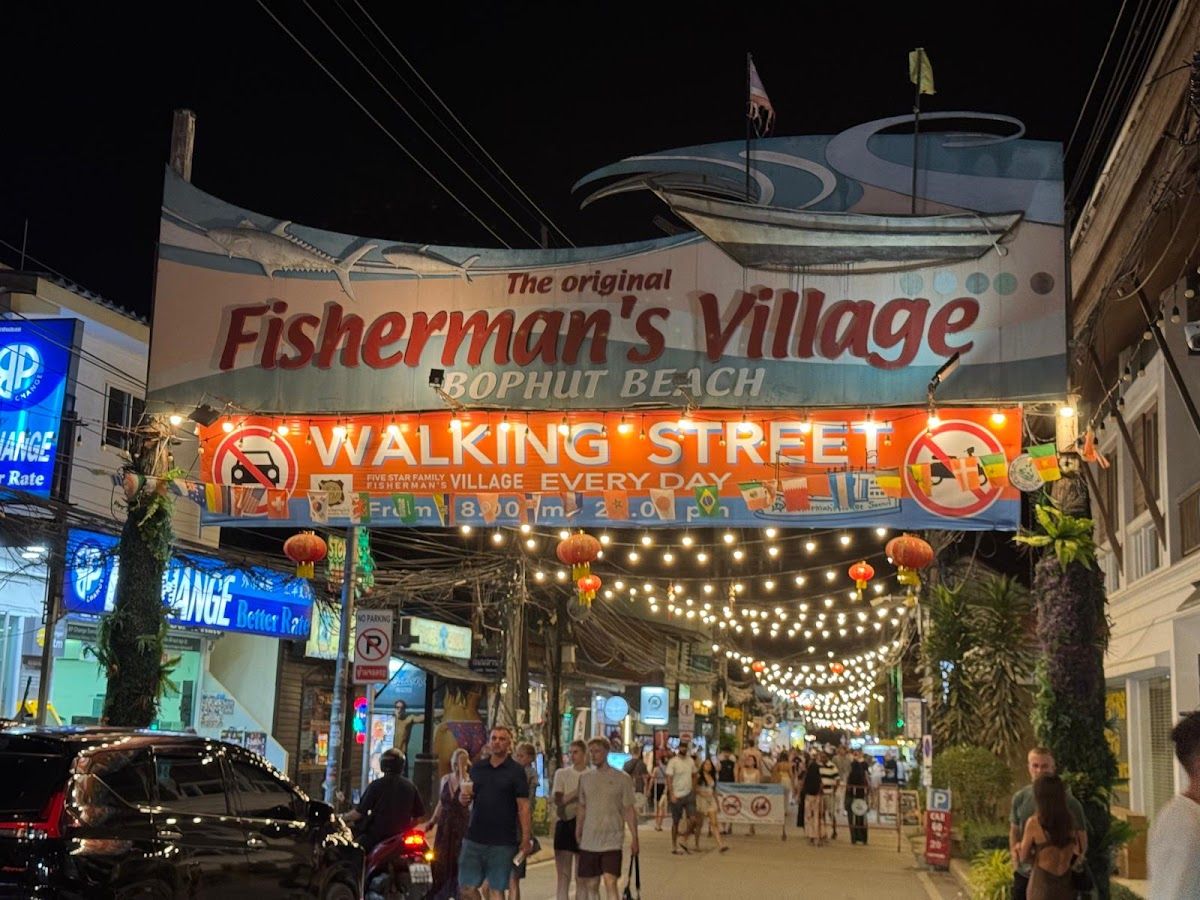
- Friday, Bophut: Fisherman’s Village walking street, about 5pm–10pm, free to walk in. The road closes. Some listings also mention smaller stalls on other evenings. Friday is the night to plan.
- Other nights in Bophut: the free Wave Market, opposite Maya Resort, is the quieter food market. Our activity page lists it as daily from 16:00, free to enter.
- Stall meal: ฿50–100. Sit-down local: ฿80–250. Beachfront seafood: ฿200–500.
- Daily local market: Laem Din, by the Chaweng roundabout.
The short version
- Best market: Fisherman’s Village Friday night market, Bophut — every Friday, 5pm–10pm, free entry
- Local meal at a market stall: ฿50–100 (~$1.50–3)
- Sit-down local restaurant: ฿80–250 per person (~$2.50–7)
- Mid-range restaurant: ฿150–400 per person (~$4.50–11)
- Key southern Thai dishes to order: khua kling, gaeng som, khanom jeen, khao tom
- Samui-specific: fresh coconut, coconut rice, coconut-based curries
- Night markets by day of week: Friday = Bophut, Wednesday/Sunday = Chaweng walking street, Monday = Nathon
Fisherman’s Village Friday market, Bophut
This is the one market on Koh Samui that reliably lives up to its reputation. Every Friday from around 5pm, the short beachfront road in Bophut village closes to traffic. A hundred-plus stalls fill the street: food at the northern end near the pier, craft and clothing further south.
The food end is the reason to come. Kanom krok — coconut milk rice cakes cooked in a dimpled cast-iron pan — are ฿20–30 for six. Grilled satay sticks, pad thai cooked fresh, green papaya salad, and Thai-style roti with condensed milk all appear within the first fifty metres. Budget ฿300–500 (~$9–14) for a full evening of food and a drink or two.
Arrive by 6pm to pick from the full selection; popular stalls sell out by 8pm. The kanom buang (crispy Thai crepes with sweet or savoury fillings) stall near the middle of the market is worth finding early.
Entry is free. The market is a 10-minute songthaew ride from Chaweng (฿30–50) or walkable from Bophut guesthouses. The street in the daytime, before the stalls go up, looks like this.
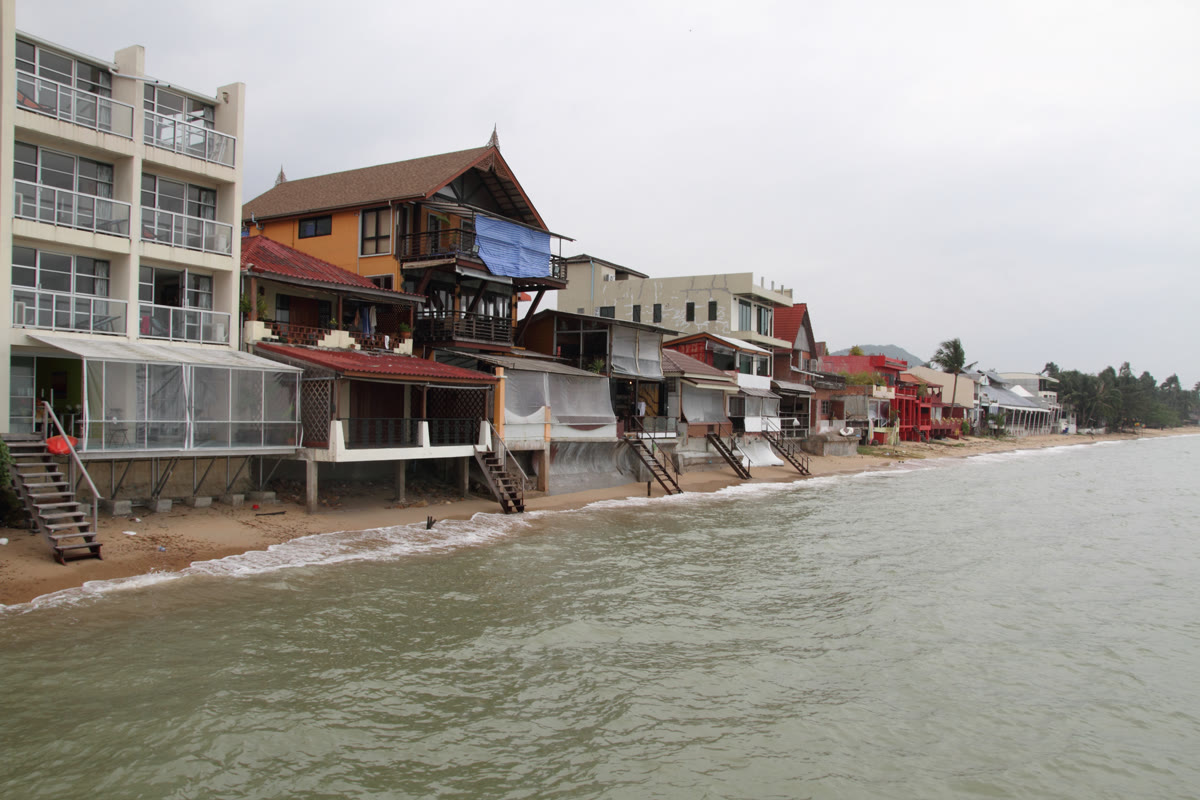
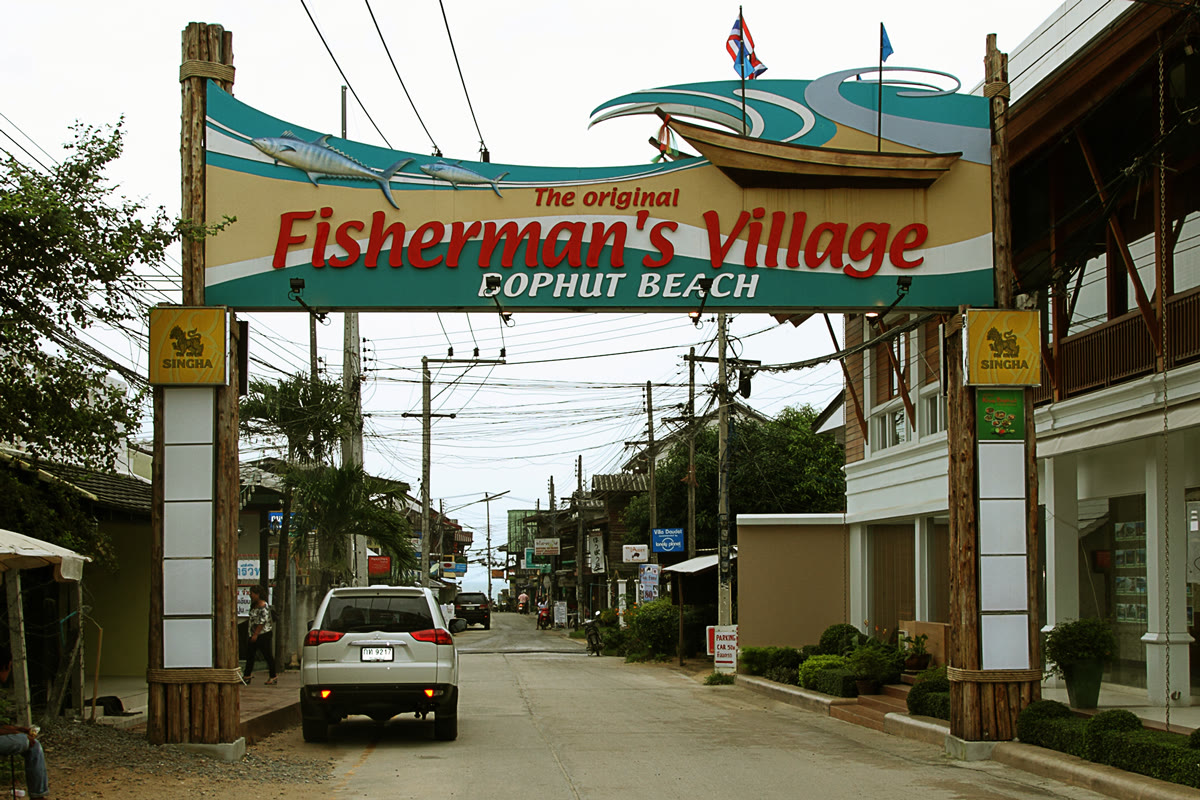
More on the individual markets: Fisherman’s Village night market, Bophut food market, Chaweng night market, Lamai fresh food market, and Mae Nam afternoon market.
Laem Din market
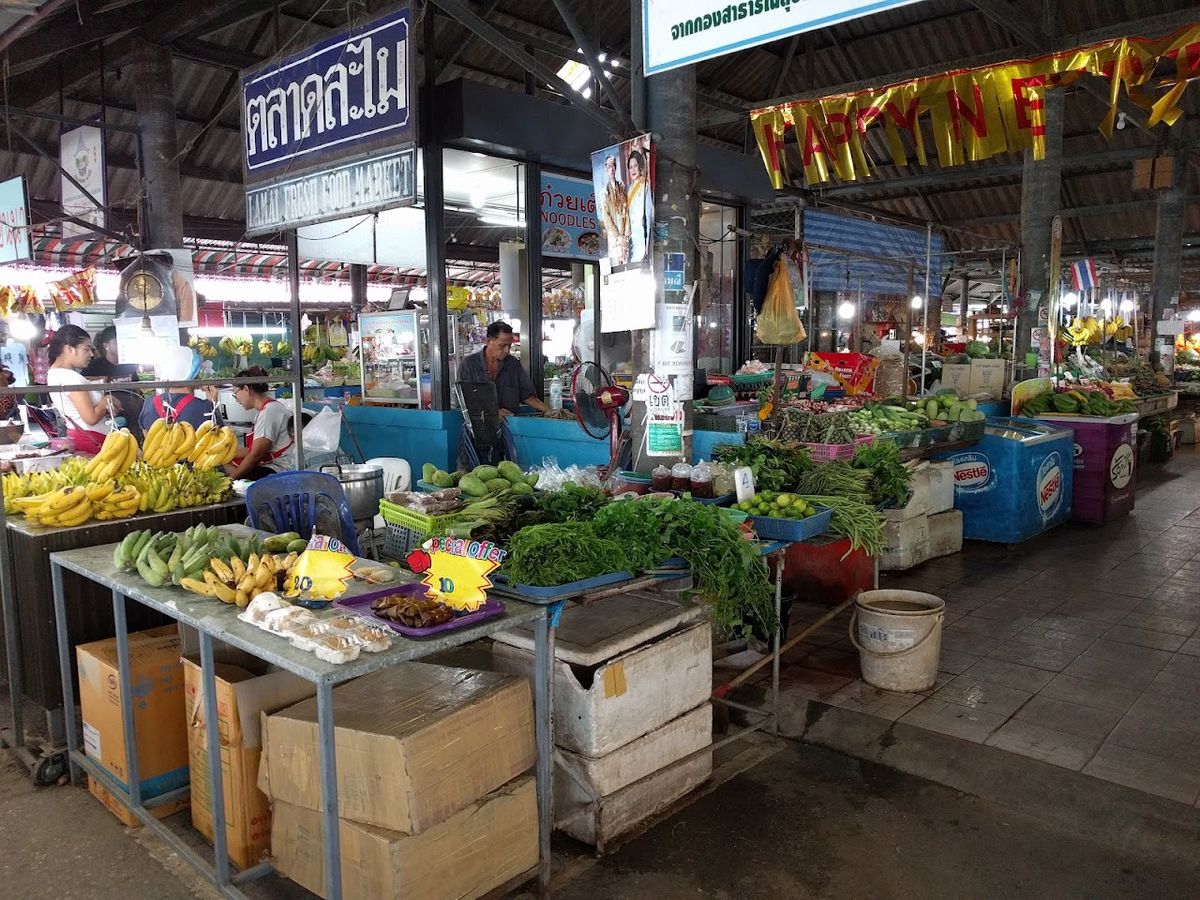
Laem Din sits near the Chaweng roundabout and runs daily — this is a working local market, not a tourist attraction. Fresh produce, dried fish, packaged goods, prepared food. In the morning, there are khao tom (rice porridge) stalls and fresh noodle vendors. Prices are the lowest you’ll find on the island. It doesn’t look like much from the outside, but this is where local residents actually shop and eat.
Chaweng night market
Chaweng has its own night market, typically running along the back streets off the main beach road on Wednesday and Sunday evenings. It’s more tourist-facing than Bophut but covers all the standards: grilled seafood, pad see ew, fresh fruit stalls, mango sticky rice. Prices are slightly higher than the local markets — expect ฿80–150 per dish — but the location is convenient if you’re already based in Chaweng.
Lamai night market
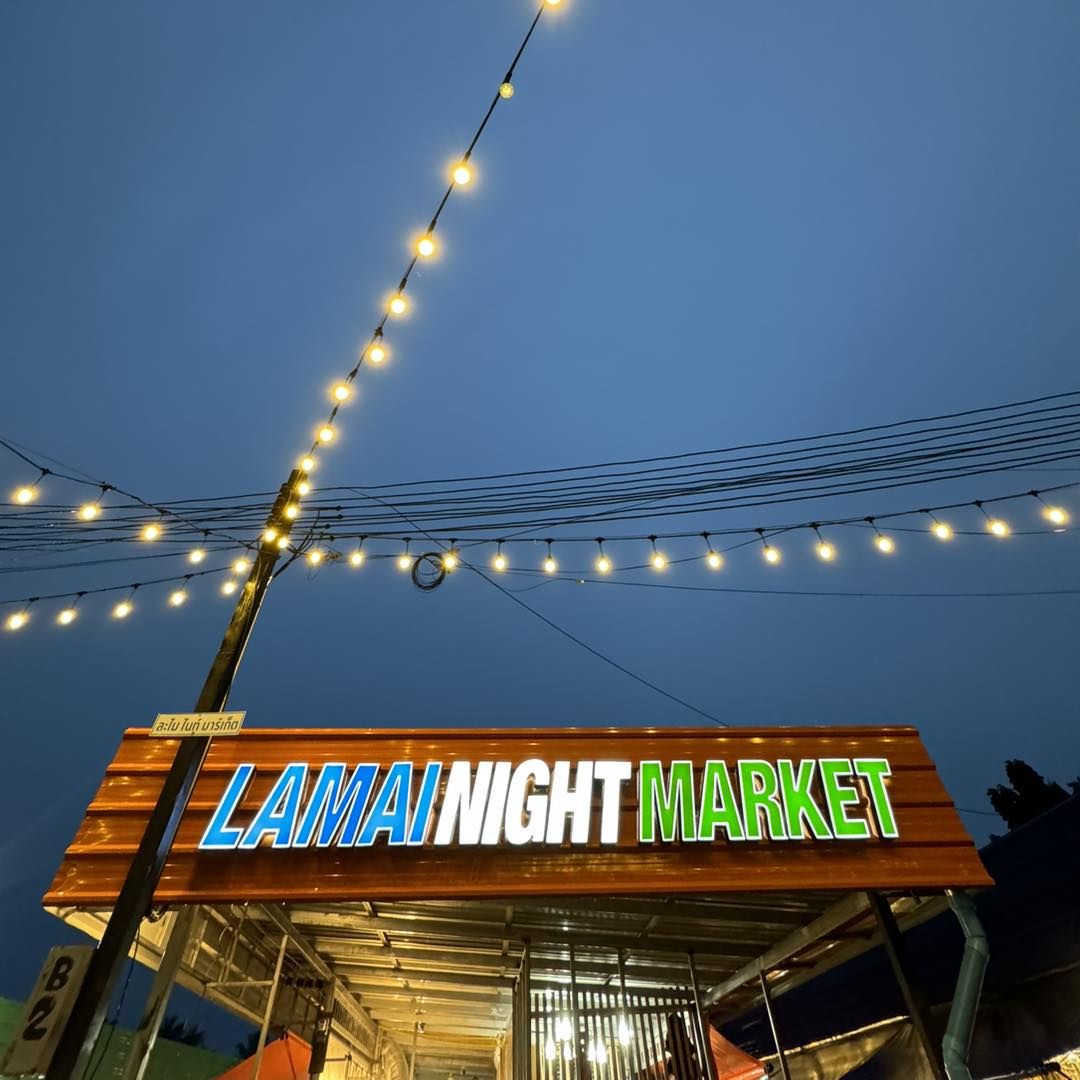
Lamai’s market runs on the eastern side of Lamai town and is more local in character than Chaweng’s. Southern Thai dishes appear more frequently here — look for gaeng som (a tart, sour fish curry with vegetables), khua kling (dry-stir-fried minced meat with southern chilli paste, intensely spicy), and nam prik (chilli dip) served with fresh vegetables. These are the dishes that define southern Thai cooking and are rarely on the menu at resort restaurants.
Nathon market
Nathon, on Samui’s west coast, has a morning market that runs daily and a walking street market on Monday evenings. It’s less polished than Bophut and more local than anywhere in Chaweng. If you’re arriving or departing via Nathon pier, the morning market is worth an hour.
Southern Thai dishes to know
Khua kling: a dry stir-fry with minced pork or beef, turmeric, kaffir lime leaf, and southern chilli paste. Much hotter than central Thai food — this is not pad thai. Order it if you want to understand what southern Thai cooking actually tastes like.
Gaeng som: a sour orange curry, thinner than coconut curries, made with fish or prawns and vegetables. The sourness comes from tamarind. It’s the everyday dish across the south.
Khanom jeen: thin fresh rice noodles served with a variety of sauces — gaeng som, green curry, or fish-based nam ya. Often served as a breakfast dish at morning markets.
Khao tom: rice porridge with pork, ginger, and egg — the Thai equivalent of congee. Common at morning markets and the best thing to eat if you’re up early for a ferry.
Coconut island
Samui was a coconut producer long before the first resort opened. The island’s interior is still planted with coconut palms, and the coconut identity persists in the food: coconut rice (khao mao) wrapped in palm leaves, fresh green coconut juice sold from street stalls (฿25–40), and coconut-based curries that use freshly pressed milk rather than tinned.
Fresh coconut ice cream, typically served in a half-shell, appears at most markets and tourist areas (฿40–60). It’s genuinely good.
Vegetarian and vegan options
The islands have seen a consistent growth in vegetarian-facing restaurants over the past decade. Several operate around Chaweng and Bophut — look for signs with the Thai yellow flag, which marks traditional Thai vegetarian (jae) cooking. Thai vegetarian food avoids meat but often uses fish sauce, so confirm what “vegetarian” means at any given spot before ordering.
International vegan restaurants operate in the Chaweng and Bophut areas; specific outlets change over, so ask at your accommodation for current recommendations.
Seafood on the beach
The beachfront restaurants in Bophut, Chaweng, and Maenam all serve fresh seafood at prices that track how close you are to the tourist strip. The best value tends to be at restaurants that are slightly removed from the front row — look one street back. A whole grilled fish with rice and vegetables runs ฿200–350 at a mid-range beach restaurant; the same dish at a local open-front place near Nathon will be closer to ฿150.
Roti and pancake stalls
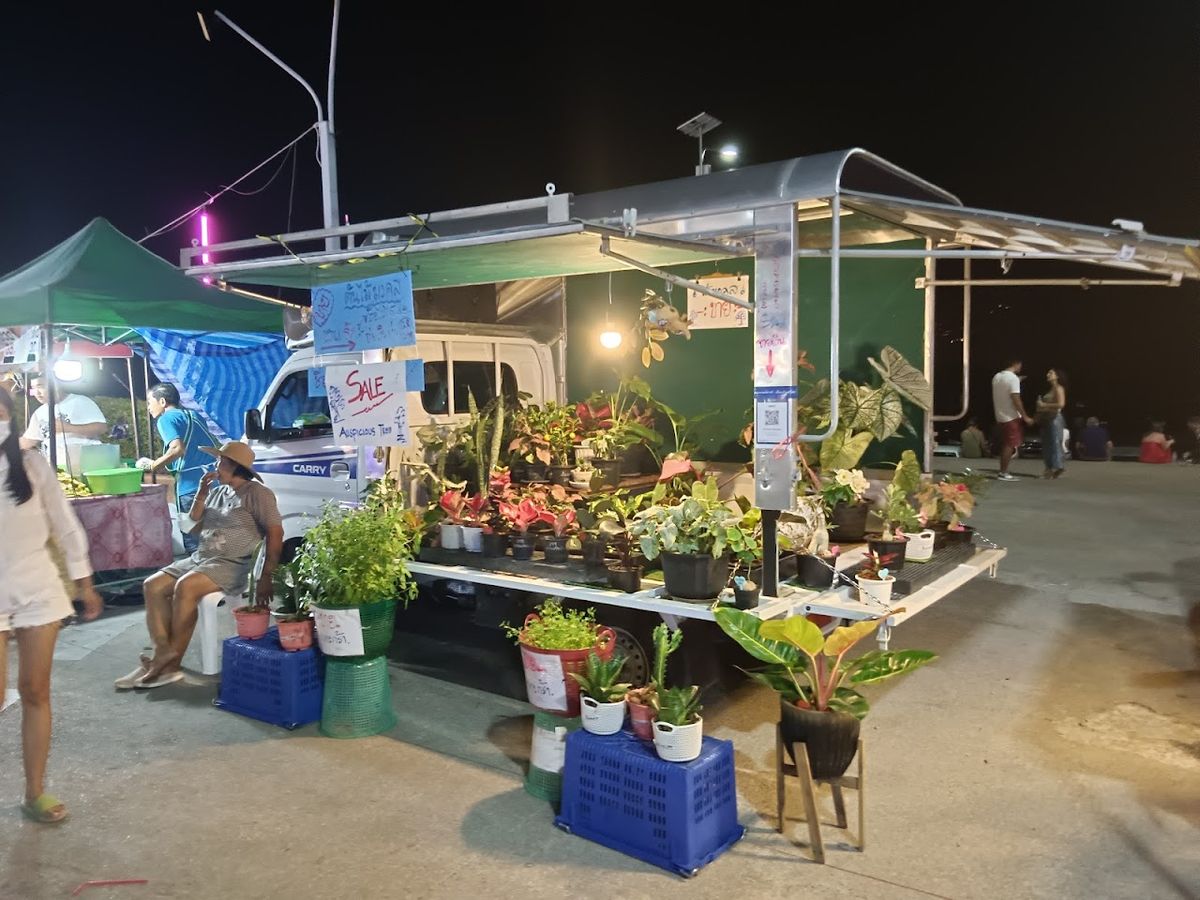
Muslim roti vendors operate from converted vans across the island — parked near markets, at beach entrances, and along the main ring road. The standard order is roti with egg and condensed milk (฿35–50). Banana pancakes for tourists are everywhere in Chaweng; the Muslim roti stalls are the better version and cost less.
Meal cost summary
| Setting | Cost per person |
|---|---|
| Market stall / street food | ฿50–100 (~$1.50–3) |
| Local open-front restaurant | ฿80–200 (~$2.50–6) |
| Mid-range sit-down | ฿150–400 (~$4.50–11) |
| Beachfront seafood | ฿200–500 (~$6–14) |
Exchange rate reference: US$1 ≈ ฿35.
Where to base yourself for food
The Bophut area has the best combination of regular night market access, walkable seafood restaurants, and local morning options. It’s also one of the calmer bases for families — see Koh Samui with kids for more on that. If budget is a priority, eating local at Laem Din and Nathon markets and cooking occasionally will cut your daily food spend significantly — the budget guide has the full breakdown.
For a broader view of what to do between meals, best things to do in Koh Samui covers the island’s highlights. Accommodation options across all budgets are at /hotels/. Where you sleep changes which market you can walk to: where to stay in Koh Samui.
FAQ
What night is the Fisherman’s Village market in Koh Samui?
Friday. The full walking street, with the road closed to cars, runs from about 5pm to 10pm and costs nothing to enter. Restaurants on the street open on other nights. A few 2026 listings also mention smaller stalls mid-week, so do not be surprised if you see some tables on a Wednesday. If you want the whole market, go on Friday.
How much does street food cost in Koh Samui?
A market stall is typically 50–100 baht a plate. A local open-front restaurant is more like 80–250 baht a person. Beachfront seafood often lands between 200 and 500 baht. Those are 2026 typical prices. The dish in front of you can sit outside the band.
Is there a night market that is not only on Friday?
Yes. The free Wave Market in Bophut is the every-evening option, quieter than the Friday walking street, and free to enter. Chaweng, Lamai and Nathon each have their own nights, listed in the sections above.